Bedding Guide
Choosing a Wool Topper: Breathability, Loft, and Care
A wool topper can soften the feel of a mattress while adding a layer that manages moisture and responds gently to changing temperatures. Its comfort depends on more than the word “wool”: fill, loft, construction, fit, and care all shape how it performs night after night.
A bed is a small climate system. Beneath a sheet, warmth gathers, moisture moves, and pressure shifts as a sleeper turns. The mattress supplies most of the bed’s underlying support; the materials above it influence the first impression of softness, the way the surface feels against skin, and how easily heat and humidity escape. A wool topper occupies this middle ground. It can add cushioning without changing the mattress itself, and it brings a set of natural-fiber characteristics that differ from foam, cotton, or down.
Choosing one is not simply a matter of finding the thickest layer or the softest description. Wool toppers vary in fiber source, fill weight, quilting, cover fabric, and attachment method. These details influence loft, stability, warmth, and maintenance. Understanding them helps turn a broad category into a practical decision: will this topper suit the mattress, the sleeper, and the household’s care routine?
What a wool topper does—and what it cannot do
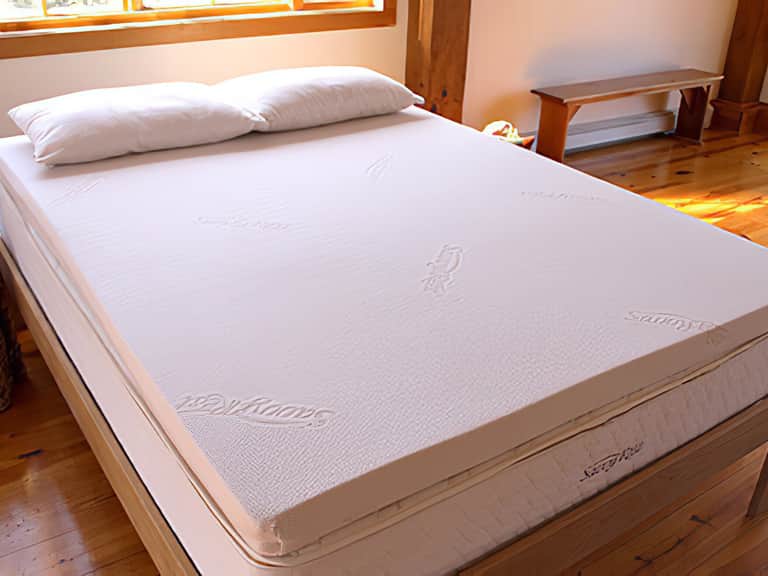
A mattress topper is a separate layer placed on top of a mattress, usually beneath a fitted sheet. A wool topper typically contains wool fiber within a fabric shell or quilted casing. Depending on its thickness and fill, it may give the surface a softer, plusher feel and create a modest buffer between the sleeper and the mattress. It does not usually replace the mattress’s support system, and it cannot reliably correct a mattress that is sagging, damaged, or unsuitable for a sleeper’s needs.
That distinction matters. If a mattress feels too firm at the surface, a topper may make the first contact gentler. If the mattress dips deeply or lacks support, adding a soft layer may leave the underlying problem unchanged—or make the surface feel less stable. A topper is best understood as an adjustment to the comfort layer, not a repair for the structure below it.
Wool’s appeal comes partly from how the fiber behaves. Its structure can absorb and release moisture, while the crimped fibers create pockets of air within the material. In bedding, those qualities can contribute to a surface that feels less clammy than one that traps moisture close to the body. Performance varies with the wool itself and with the topper’s density, cover, and construction; no fiber guarantees a particular temperature for every sleeper.
Breathability: a question of the whole layer
“Breathable” is often used as if it describes a single, measurable sensation. In practice, airflow and moisture movement depend on an entire bedding assembly: the mattress, topper, protector, sheets, room conditions, and even the amount of insulation supplied by blankets. A wool fill may help manage moisture, but a tightly coated cover or a heavily layered bed can alter the result.
Wool fibers can take up water vapor and release it into the surrounding air as conditions change. This is different from saying that a wool topper is waterproof or that it will keep every sleeper cool. It is neither. A wool layer may feel comfortable across a range of conditions, but personal warmth, bedroom temperature, bedding choices, and the construction of the topper all have a part to play.
When assessing breathable bedding, look beyond the fiber label. Check whether the shell is made from cotton or another fabric, whether the construction is quilted, and whether the product includes a membrane or finish. A dense barrier intended to resist spills may change airflow and feel. A simple fabric cover may allow a more direct interaction with the fill, although its durability and cleanability still deserve attention.
Consider the rest of the bed as well. A waterproof protector can be useful for guarding against accidents and spills, but its material and design may affect the feel of the surface. If temperature comfort is a concern, compare the protector’s care and construction details, and avoid assuming that one breathable component makes every layer breathable. Lightweight sheets and a suitable duvet can matter as much as the topper.
Loft, thickness, and fill weight
Loft is the visible or perceived thickness of a textile layer. In a wool topper, loft influences how much cushion the layer seems to provide, but it is not a complete measure of comfort. A topper with substantial loft may compress under body weight. Another, with a flatter profile and denser fill, may feel more substantial than its height suggests. Fill weight, fiber distribution, quilting, and the sleeper’s body shape all influence the result.
Thickness is often listed in product specifications, but it can be difficult to compare across makers. Some measurements describe the topper uncompressed; others may reflect the sewn construction or an approximate loft. Ask whether a stated height refers to the whole finished layer and whether it is measured before or after settling. If exact dimensions are not given, the product description may provide clues about the intended feel, but words such as “plush” and “cushioned” are subjective.
A lower-loft wool topper may make a subtle change, adding a light layer between sheet and mattress. A fuller topper can create a more noticeable surface change, though it may also shift more easily or require deeper fitted sheets. Neither approach is automatically better. The right choice depends on how much alteration the existing mattress needs and how much added height the bed can accommodate.
Fill weight describes how much material is used, sometimes given for a particular size or area. It can offer a useful point of comparison when specifications are clear, but it does not reveal fiber quality or distribution by itself. A well-made topper should keep the fill reasonably even. Uneven clumps or bare zones can create an inconsistent surface, so construction details—such as box quilting, channel quilting, or other stitching patterns—are worth reviewing.
- For a small change in feel: look for a relatively low-profile design and clear information about its fill.
- For more surface cushioning: compare loft and fill weight, while remembering that a soft layer cannot repair a worn-out mattress.
- For a changing or shared bed: consider whether the topper’s thickness could make movement, sheet fit, or edge access less convenient.
Fiber, sourcing, and construction
Wool is not a single uniform material. Fiber can differ by animal, region, staple length, processing, and preparation. Some toppers use wool batting arranged in a broad layer; others may use more loosely distributed fill. The way wool is cleaned, carded, and secured affects its feel and how it settles over time. Product descriptions that identify the fill and explain the construction are more useful than a general claim of natural comfort.
The shell deserves equal attention. Cotton is common in wool bedding because it provides a familiar woven surface, but cotton covers can vary in weight and weave. A tightly woven shell may help contain loose fibers, while a softer, more flexible cover may change how the topper conforms to the mattress. Seams and quilting keep layers in place, but dense stitching can make a topper feel more structured. Examine the specifications for fabric content, fill composition, and how the layers are joined.
Certification language should be read precisely. A certification may apply to a particular fiber, facility, or production stage rather than to every component of a finished topper. Check the scope of any claim and whether the product documentation identifies the certified material. Terms such as “organic,” “natural,” or “chemical-free” can be broad; they are not substitutes for specific material disclosures and independently verifiable standards.
For households concerned about sensitivities, it is helpful to distinguish between fiber properties and individual experience. Wool is an animal fiber, and some people may not prefer its smell or feel, especially when the product is new. A cover separates the fill from direct skin contact, but it does not eliminate every possible reaction. Reviewing return terms, material details, and care instructions can be especially important when comfort is uncertain.
Fit: the overlooked part of comfort
A topper that slides, bunches, or leaves the mattress edges exposed can interrupt the simple purpose of adding a layer. Before ordering, measure the mattress rather than relying only on its advertised size. Confirm its length and width, then measure its depth—including any existing pad or protector if those layers will remain in place. The combined height determines whether fitted sheets will still sit securely.
Some toppers rely on their weight and the fitted sheet to stay put. Others have elastic straps or a skirt. Each approach has trade-offs: a fitted design may anchor more firmly, while a loose layer can be easier to remove and air out. Check that the attachment method is compatible with the mattress depth and that the topper is intended for the bed’s size. On adjustable bases, confirm that the layer can move with the mattress sections without folding or pulling out of position.
Also consider the bed’s edge. A thick, soft layer can change how the perimeter feels when sitting down or getting up. If a sleeper uses the edge frequently, or if the mattress is already narrow, extra loft may reduce the usable surface. A topper’s comfort cannot be judged only from its center; fit and stability across the full bed matter.
Care: protect the fill by following the label
Care instructions are central to choosing wool bedding. Some wool toppers can be washed; others are intended for spot cleaning or professional care. The word “wool” alone does not tell you which applies. Washing can cause shrinkage, distortion, or unevenly settled fill if the product is not designed for immersion or machine agitation. Before purchase, find the care label or manufacturer’s instructions and decide whether they fit the household’s routine.
If a topper is labeled washable, follow the stated water temperature, detergent guidance, cycle, and drying method. Avoid substituting a more aggressive process for convenience. High heat and forceful agitation can damage fibers and stitching. If the label calls for a large-capacity machine, using a smaller machine may compress the topper or prevent it from rinsing properly. When instructions are unclear, contact the maker before cleaning.
For toppers that are not washable, prevention becomes more important. Use a fitted sheet and, where appropriate, a compatible mattress protector. Air the bed regularly when practical, and deal with spills promptly according to the care guidance. Do not soak a wool-filled layer unless its instructions explicitly allow it; moisture left inside can take a long time to dry and may affect the fill or create an unpleasant odor.
Some wool products have a natural scent, particularly when new or when humidity rises. Gentle airing in a dry, ventilated space may help, but the care label should guide handling. Avoid strong fragrances or cleaning agents that could leave residues. If an odor is persistent, sharply unpleasant, or accompanied by visible staining, seek the manufacturer’s advice rather than masking it.
Over time, natural fibers can settle. Occasional gentle redistribution—if permitted by the maker—may help maintain an even layer. The construction determines what is safe: a quilted topper should not be pulled or shaken roughly, and stitching should be checked for damage. Storing the topper clean and completely dry, in a breathable bag or cover, can help protect it between seasons. Avoid tightly compressing it for long periods unless the manufacturer recommends that method.
How to decide whether wool suits your setup
Start with the problem you are trying to solve. If the mattress is structurally sound but feels a little too firm at the surface, a topper may be worth considering. If the concern is overheating or a damp-feeling bed, examine the whole bedding system before assigning the issue to one layer. If the mattress has a deep dip, broken components, or uneven support, a topper is unlikely to restore a level foundation.
Next, think about the feel you want. Wool can offer a cushioned, resilient layer, but it does not behave exactly like memory foam, latex, down, or a thin cotton pad. Foam often contours more closely; latex tends to feel springier; a wool layer has its own compressible, fiber-filled character. These comparisons are general rather than universal, since density and construction can change the experience.
Then match the topper to practical constraints. Will your sheets fit? Can the layer be cleaned in the way you expect? Does the bed have an adjustable base? Is the topper easy to lift and store? Could its added height affect a bed rail, frame, or a sleeper’s ability to get in and out? These details are less poetic than fiber descriptions, but they often determine whether a bedding choice remains useful.
Finally, read the full specification, not just the headline. Look for material percentages, dimensions, thickness, fill weight if provided, attachment style, origin information, certification scope, warranty, and return policy. A clear description makes it easier to compare wool toppers on equal terms. When details are missing, treat that uncertainty as part of the decision rather than assuming every product in the category is made alike.
A practical comparison checklist
- Purpose: Is the goal to soften the surface, add a little loft, or adjust how the bed manages moisture?
- Mattress condition: Is the mattress flat, supportive, and in good condition beneath the layer?
- Fill: Does the maker identify the wool and describe how it is prepared or distributed?
- Loft and weight: Are thickness and fill details provided clearly enough to compare?
- Cover: What is it made from, and how might its weave affect feel and airflow?
- Fit: Do the dimensions, attachment method, and pocket depth work with the mattress?
- Care: Can you follow the cleaning and drying instructions with the facilities you have?
- Verification: Are certifications or sourcing claims specific and supported by documentation?
- Trial and warranty: What happens if the feel or fit is not right, and what conditions apply?
The useful measure is the whole night
Wool toppers bring together several qualities: a soft layer of loft, a fiber structure that can interact with moisture, and construction choices that shape the bed’s feel. None works in isolation. A breathable shell cannot compensate for an overly warm bedding stack, and generous loft cannot solve a mattress that no longer supports the sleeper evenly. The topper is one component in a larger system.
The most considered choice is therefore not necessarily the thickest or most elaborate. It is the layer whose fill, fit, and care requirements make sense for the mattress and the people using it. Read the specifications closely, measure the bed, and be realistic about what a topper can change. When those practical details align, wool can offer a comfortable way to refine a sleep surface without replacing its foundation.
Frequently asked questions
Does a wool topper make a bed cooler?
Not necessarily. Wool can absorb and release moisture, and its structure can support air spaces within the fill, but the overall temperature experience depends on the topper’s construction, bedding layers, room conditions, and individual preferences. It is more accurate to think of wool as a material that can help manage moisture than as a guaranteed cooling solution.
Can a wool topper make a firm mattress softer?
It may add surface cushioning and change the first feel of a firm mattress. The degree of change depends on loft, fill, and construction. A topper will not reliably correct a sagging mattress or replace the support of a suitable mattress.
How often should a wool topper be cleaned?
There is no universal schedule. Follow the care instructions for the specific product and use a sheet to limit direct exposure to skin oils and everyday soil. Some designs are washable; others require spot or professional care. Cleaning too aggressively can damage the fill or shell.
Will a wool topper fit beneath standard sheets?
That depends on the mattress depth, the topper’s loft, and any other layers on the bed. Measure the full stack and check the fitted sheet’s pocket depth before buying. A deeper topper may require deeper-pocket sheets to stay in place.